
Piano Lacquer vs. Leather: Choosing the Right Finish for Custom Watch Boxes
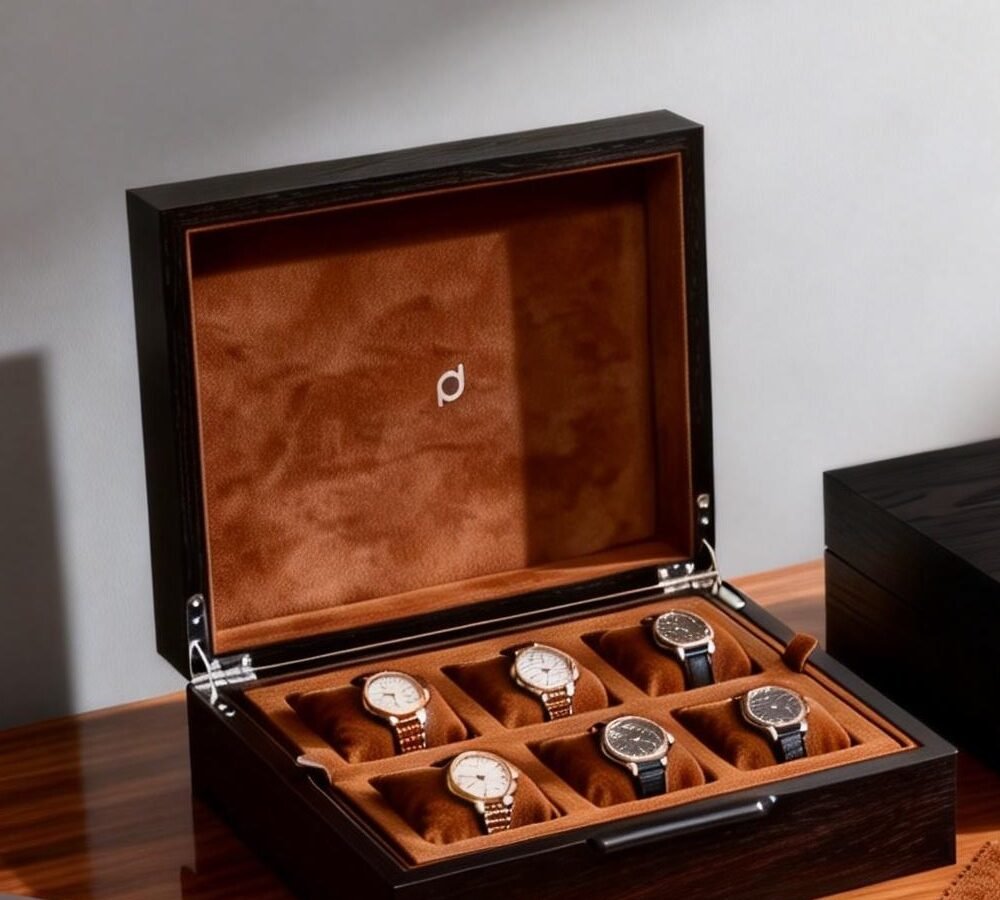
Piano lacquer and leather are the two finishes we’re asked about most for watch boxes and winder cabinets, and brands often assume the choice is purely aesthetic. In production, the two involve genuinely different processes, tolerances, and cost structures — worth understanding before you lock in a spec.
Piano lacquer: precision, and unforgiving of shortcuts
A true piano-lacquer finish is built up in multiple sprayed and cured coats over a prepared wood substrate, then wet-sanded and polished to its high-gloss, mirror-like surface. Every stage adds time, and any dust or surface defect at an early coat telegraphs through to the final polish — which is why lacquer quality varies so widely between factories. Done well, it reads as premium and holds up to years of handling without dulling or yellowing prematurely. Done poorly, it shows hairline crazing or an uneven sheen within months. If a supplier can’t describe their coat count and cure process specifically, that’s usually a sign they’re outsourcing the lacquer stage rather than controlling it directly.
Leather: more forgiving, more dependent on material grade
Leather exteriors and interiors involve a different set of variables — hide grade, tanning process, and stitching consistency matter more than spray technique. Genuine leather ages with a patina many brands want; PU leather offers more consistent color batches and a lower price point, at the cost of that natural aging character. Leather is generally more forgiving of minor handling marks than lacquer, but interior cushioning tolerances (how snugly a watch pillow holds a case without marking it) take just as much attention to get right.
How the two compare in practice
- Positioning: Piano lacquer tends to read as more formal and boutique; leather reads as warmer and more accessible, though genuine leather at a high grade sits in the same premium tier as lacquer.
- Durability: A well-executed lacquer finish resists scratching in normal handling but shows any impact damage clearly; leather hides minor wear better but is more sensitive to moisture and direct sun exposure over time.
- Lead time: Lacquer’s multi-coat cure process generally takes longer per unit than leather work, which can matter if you’re working against a launch date.
- Customization: Both support engraved or embossed branding; lacquer also allows custom color matching to a brand’s exact palette, which leather dye can approximate but not always match precisely.
Our take
We produce both in-house, alongside the motor assembly for winder cabinets, so the choice doesn’t have to be locked in before you’ve seen samples of each against your brand’s actual color and positioning. A number of our longer-running programs — including a nearly two-decade partnership with a major European electronics brand — have used piano lacquer exteriors with leather interiors specifically to get both the formal exterior read and the tactile interior feel in one unit.
Which one matches how you’d describe your brand to a customer in one sentence — formal and precise, or warm and tactile?