
Custom Watch Winder Settings for Private Label Buyers and Retail Programs
Why Settings Matter in a Private Label Watch Winder
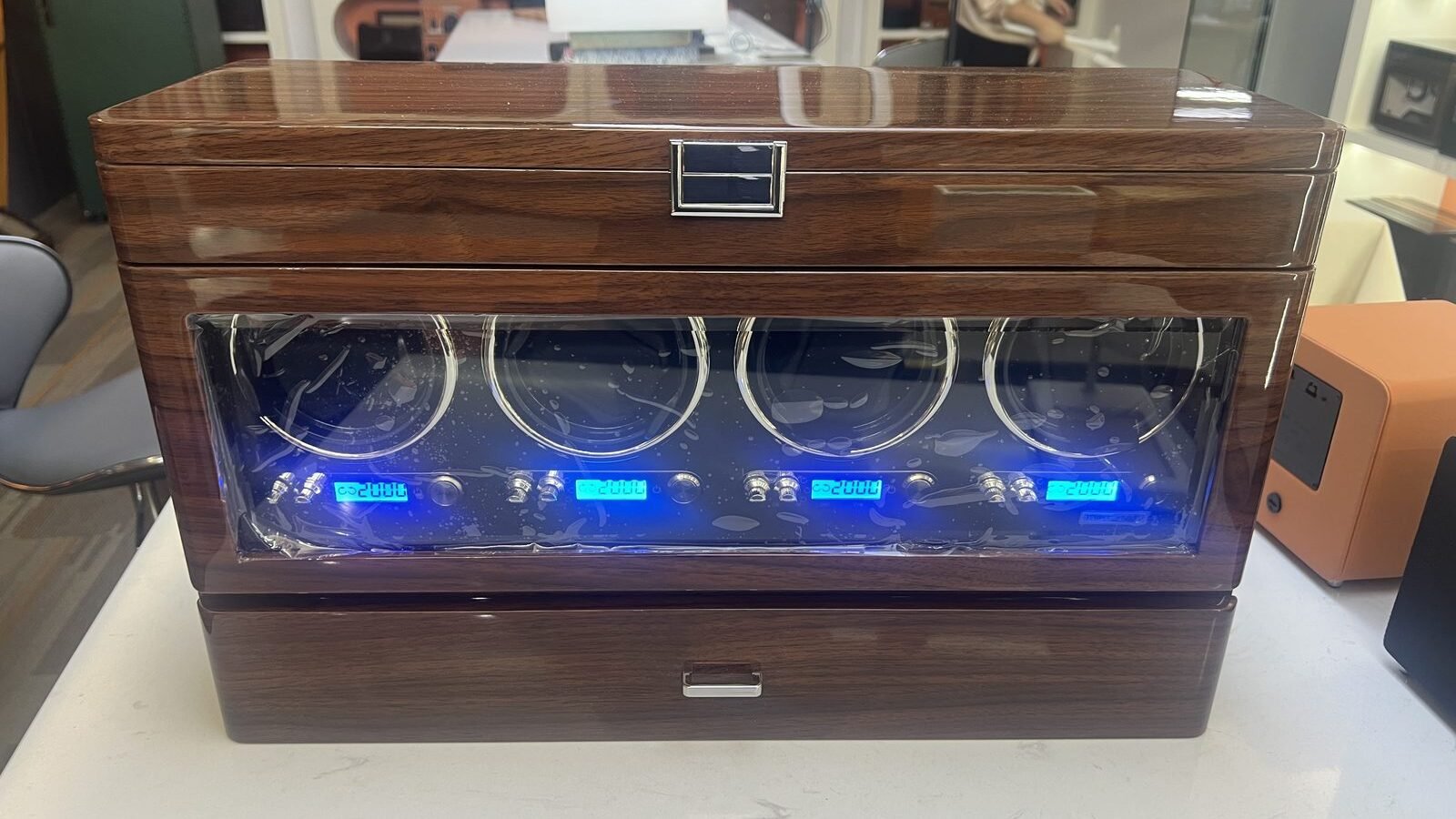
For a private-label buyer, a watch winder is not only a storage accessory. It has to protect automatic watches, match the brand’s visual direction, and feel reliable in daily use. The exterior finish attracts attention first, but the settings and internal structure decide whether the product works well after purchase.
Custom watch winder settings matter because end customers own different automatic watches. A fixed movement pattern may not fit every use case. Buyers should plan rotation direction, TPD control, timed rest cycles, interior support, and user instructions before sampling.
When these details are defined early, the product is easier to quote, sample, photograph, and explain on a retail or B2B product page.
Start With the Target Customer
The first decision is the customer profile. A buyer sourcing a compact winder for entry-level retail needs a different product from a brand building a premium gift set for collectors.
Before requesting a sample, define the likely buyer:
– A first-time automatic watch owner – A collector rotating several watches – A retailer adding accessories beside watches and watch boxes – A private-label brand building a coordinated storage line – A corporate gift program
This context shapes the capacity, materials, control layout, and packaging. It also helps the manufacturer avoid a generic recommendation. A watch winder for a broad retail shelf should be easy to use. A winder for collectors may need more visible setting control and stronger product education.
Specify Rotation Direction Clearly
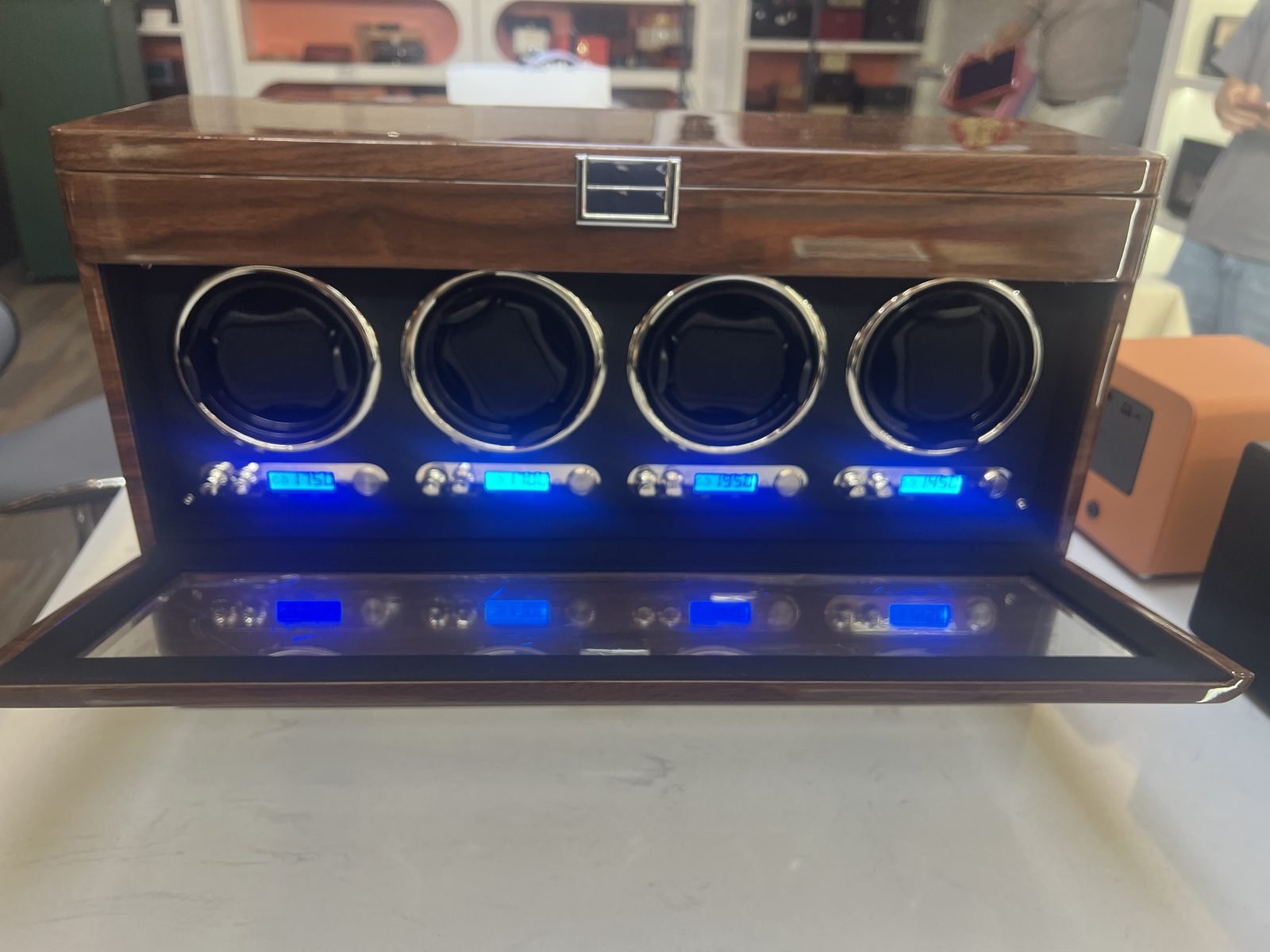
Rotation direction is one of the core settings to confirm in a custom automatic watch winder. Olymbros can support adjustable rotation direction, including CW, CCW, and bidirectional movement.
For B2B buyers, this is important because the product may be sold to customers who own different automatic watches. If the winder is positioned for a broad retail audience, bidirectional movement can make the product easier to communicate. If the product is designed for a specific audience, the instructions should still make the setting clear.
The goal is not to make the control panel complicated. The goal is to make the function useful and understandable. Clear labels, simple instructions, and consistent control placement can reduce customer confusion after sale.
This is also a product-page opportunity. When Claude publishes this article, it can link the phrase [watch winders](https://olymbroswatchwinders.com/product-category/watch-winders/) to the category page so readers can continue from education to product review.

Plan TPD Control Before Sampling
TPD means turns per day. In sourcing discussions, it is one of the most practical settings to define because customers may expect different levels of control.
Olymbros watch winders can support adjustable TPD settings. For private-label buyers, the main question is how much control the end user should have. Some retail products work better with a simpler interface. Other programs, especially those aimed at collectors, may need a clearer control panel and more detailed instructions.
During sample review, buyers should check:
– Whether the TPD control is easy to find – Whether labels remain readable after branding changes – Whether the instruction card explains the setting in plain English – Whether the control feels consistent across the sample – Whether the setting design fits the product’s price position
The TPD feature should be treated as part of the product experience, not only as a technical detail hidden in the specification sheet.
Timed Rest Cycles Support Everyday Use
A watch winder should not feel like a device that runs without logic. Timed rest cycles help make the motion pattern feel more intentional. Olymbros can support timed sleep settings as part of watch winder customization.
For buyers, timed rest is both a function and a communication point. If the feature is included, product copy, manuals, and after-sales materials should explain it simply. Customers should understand that the winder is designed to rotate and rest according to the selected program.
This matters for retail quality perception. A customer may not inspect every internal component, but they will notice whether the winder feels stable, quiet, and consistent in use. During sampling, buyers should observe the product through its working cycle rather than checking only the finish and logo.
Match Settings With Materials and Interior Design
Settings should not be separated from physical design. A watch winder is often placed on a desk, shelf, dressing table, or retail display. The materials and interior need to support the same market position as the movement features.
Available material directions for Olymbros programs include piano lacquer, matte wood veneer, aluminum, carbon fiber texture, genuine leather, and PU leather. Interior options can include velvet, suede, or microfiber. These choices affect how the product photographs, how it feels, and how naturally it sits beside [watch boxes](https://olymbroswatchwinders.com/product-category/watch-boxes/) or other storage accessories.
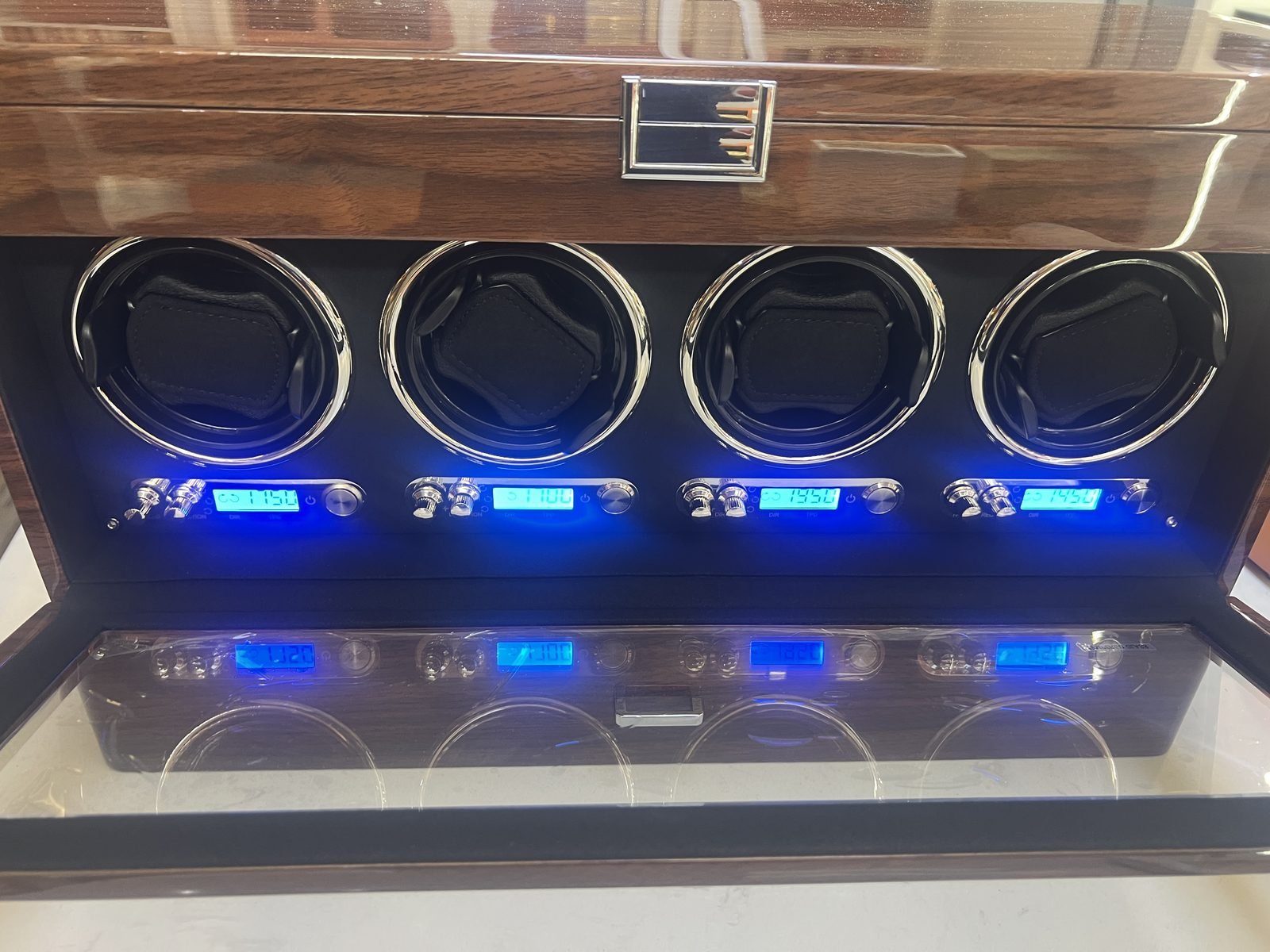
The control area should fit the design direction. A refined exterior with unclear controls creates a weak product experience. Buyers should review button placement, labeling, user access, and the relationship between the control panel and the overall cabinet design.
Use the Sample Stage for Functional Review
Olymbros supports OEM, ODM, and private-label projects, with a sample cycle of 7-14 days. That stage should be used for more than checking color, logo size, or surface finish.
For a custom watch winder program, the sample review should include:
– Rotation direction selection – TPD setting behavior – Timed sleep behavior – Cushion fit and ease of watch placement – Interior lining quality – Noise and vibration during operation – Packaging fit and protection during handling
If the product will be sold online, the sample should also be photographed in the same style planned for the product page. This helps the buyer see whether the material, interior, and controls are easy to explain visually.
For retail buyers, packaging should be reviewed with the same care. The full experience includes the box, inserts, manual, and shipping protection.
Production Control Matters for Repeat Orders
A private-label watch winder program is rarely about one order only. Buyers need consistency across reorders, especially when the product is part of a long-term accessory collection.
Olymbros was established in 2008 and has more than 18 years of manufacturing experience. Its integrated production covers woodwork, painting, motor assembly, and interior work, reducing handoff gaps across different product stages. For buyers, this matters because a watch winder combines decorative, mechanical, and electronic elements.
Electronic components can be aligned with CE, RoHS, and UL standards. Buyers serving markets where documentation matters should confirm compliance needs before production.
Repeatability also affects branding. If a buyer orders a winder now and matching products later, the finish, lining, logo treatment, and packaging direction should stay consistent.
Connect the Winder to a Wider Product Line
Many private-label buyers start with one watch winder and later expand into related storage products. This works better when the design system is planned from the beginning.
A coordinated line may include winders for automatic watch care, boxes for home storage, travel rolls for mobility, and stands for display. Shared leather tones, lining materials, logo treatments, or packaging structures can connect the collection without making every product identical.
This approach supports both merchandising and SEO. Someone reading about winders may also need storage boxes or travel accessories. Claude can link this article to [OEM/ODM customization](https://olymbroswatchwinders.com/oem-odm-customization/) and [contact us](https://olymbroswatchwinders.com/contact-us/) so B2B readers have a clear next step.
What Buyers Should Prepare Before Requesting a Quote
Before contacting a manufacturer, buyers can make the process faster by preparing a practical brief. Useful details include:
– Target customer and sales channel – Desired capacity and size direction – Preferred exterior material and interior lining – Required rotation direction options – Required TPD and timed rest controls – Logo method and placement – Packaging direction – Sample expectations – Compliance requirements for the destination market
This brief gives the manufacturer enough context to respond with a focused recommendation instead of a broad catalog answer.
Conclusion
Custom watch winder settings shape how the product works, how customers understand it, and how confidently a buyer can sell it under a private label.
For B2B buyers, the practical approach is to connect function with product positioning. Rotation direction, TPD control, timed rest, interior fit, materials, packaging, and repeat-order consistency should be planned together. If your team is preparing a private-label watch winder project, which settings and design details do you need to confirm before sampling?