
Private Label Watch Winder Product Brief: What Buyers Should Specify Before Sampling
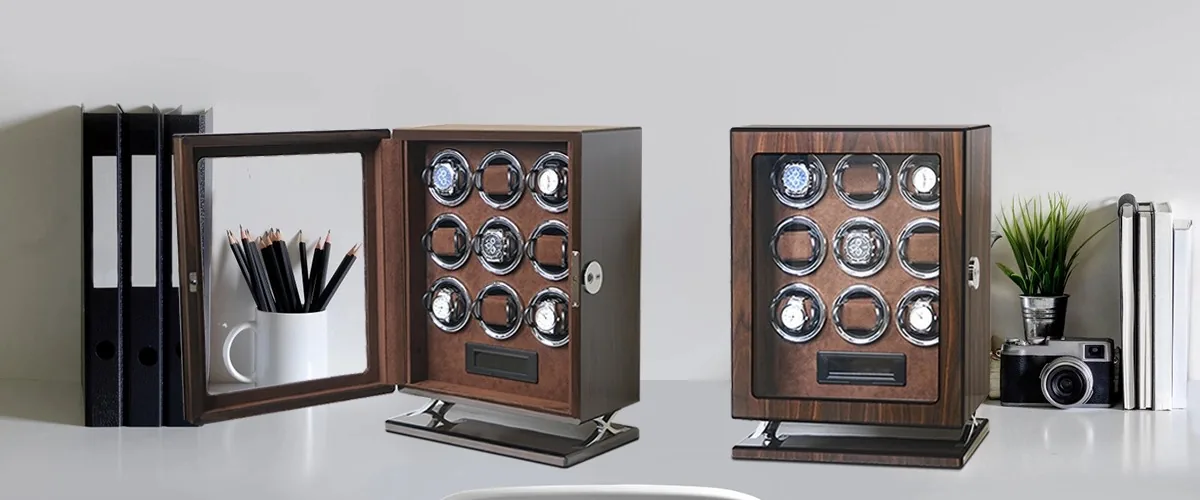
Why a Product Brief Comes Before a Sample Request
A sample request without a clear brief often creates extra revision rounds. A manufacturer needs to understand what the product should do, how it should look, where it will be sold, and which details are fixed versus open for recommendation.
A private label watch winder product brief turns those decisions into one practical reference. It helps a watch brand, retailer, distributor, or gift-program buyer compare sample feedback against the original intent. It also gives the development team a shared basis for discussing materials, controls, logo treatment, packaging, and approval steps.
The brief does not need to be long. It needs to answer questions that affect the physical product. This makes sampling more useful and reduces the risk that a visually appealing sample is approved before its functions or packaging are fully considered.
Start with the Customer and Sales Situation
Before choosing a finish or asking for a logo, define who will use the watch winder. A home user, a retail customer, a collector receiving a gift, and a boutique sales associate may all interact with the same category differently. The product brief should state the intended customer, sales channel, price positioning, and whether the winder is a standalone accessory or part of a broader watch storage line.
This information influences later choices. A product designed for a boutique display may require an easy-to-explain control area and a presentation that works under store lighting. A product for a private label gift program may place greater emphasis on unboxing, branding, and coordinated packaging. An online-first product needs photographs that clearly show the exterior, interior, and functional elements.
Write down the commercial role in a sentence or two. For example: “A single-watch private label winder for a brand gift package,” or “A retail accessory designed to sit beside a watch box collection.” That statement helps prevent unrelated details from being added merely because they appeared in another product project.
Define Capacity, Watch Fit, and Interior Contact Points
The product brief should identify how many watches the winder is intended to hold. It should also describe the type of watches expected to be used, especially if the buyer has a particular case size, strap style, or bracelet profile in mind. Avoid assuming that one cushion or one interior arrangement will suit every watch in the target collection.
Ask for photographs or physical references when available. A watch placed on a cushion can reveal issues that are not obvious in a rendering: the support may feel too loose, the watch may sit at an awkward angle, or a visible gap may weaken the product presentation. These are product-fit questions, not cosmetic details.
Interior contact materials should be specified in the same section. Olymbros offers velvet, suede, and microfiber lining options. A buyer can request a direction for color, feel, and contrast with the exterior, then review the actual sample before making final approval. The product brief should also note which surfaces must remain visible when the lid is opened, since those areas can carry much of the perceived value in product photography.
Document the Winder Functions in Plain Language
The core functional section should describe how the watch winder is expected to operate. Available settings can include clockwise, counterclockwise, or bidirectional rotation, along with turns-per-day settings and timed rest periods. The buyer does not need to write an engineering specification from scratch, but should explain the intended use and any control requirements.
For example, the brief can ask whether the control interface should be discreet or visibly accessible, whether the product will be demonstrated in retail, and whether instructions should be included in the package. It should distinguish between requirements that are mandatory and areas where the manufacturer may recommend a solution.
If a destination market has compliance requirements, record them early. Electronic components can comply with CE, RoHS, and UL standards, but the final requirement must be tied to the specific product and market. Do not add compliance language to product packaging or marketing materials until the applicable configuration has been confirmed.
Choose Materials and Branding as One System
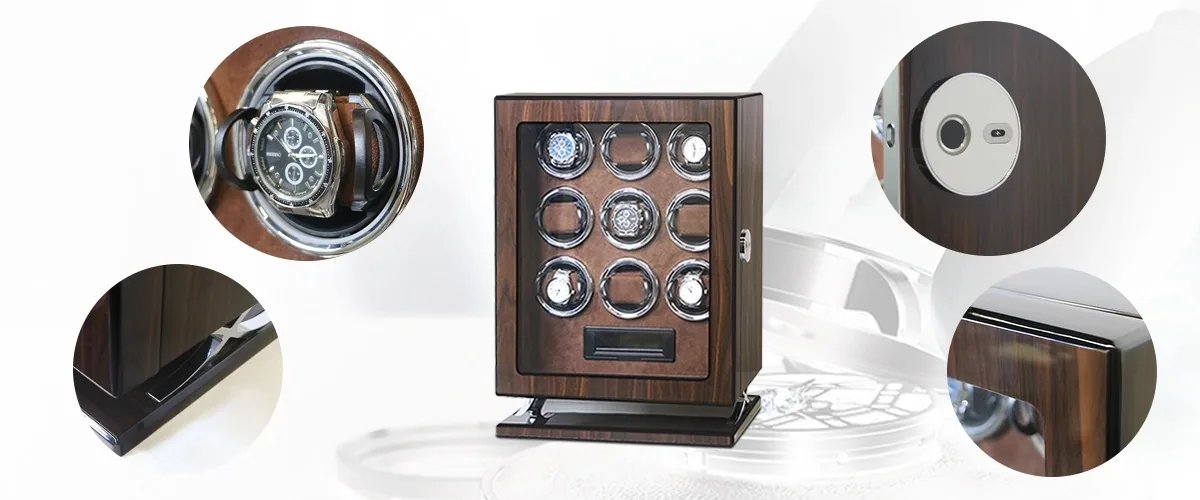
Materials should not be selected from an isolated swatch. They affect surface appearance, how the product is handled, what can be photographed effectively, and how a logo appears. Available material directions include piano lacquer, matte wood veneer, aluminum, carbon-fiber-pattern finishes, genuine leather, and PU leather. The interior can then be coordinated with velvet, suede, or microfiber.
In the brief, identify a preferred exterior finish, color family, interior direction, hardware tone, and reference images. If a brand has existing packaging or a watch box collection, include those references so the winder can be evaluated as part of a visual system. It is useful to say whether exact color matching is required or whether a complementary appearance is acceptable.
Branding should be described with the same care. State where the logo should appear, whether it should be visible with the product closed and open, and whether the mark needs to appear on the packaging. A small logo that works on an exterior lid may not be legible on an interior plate or a retail carton. Seeing the complete sample under normal viewing conditions is more reliable than approving logo placement from a digital layout alone.
Include Packaging and Content Requirements Early
Packaging is part of the product brief because it affects the first physical interaction and the logistics plan. Specify whether the watch winder will be sold through retail, e-commerce, a gift program, or a combination of channels. Then describe what the buyer expects the customer to find when the box is opened: the product, instructions, branding materials, protective elements, or other approved accessories.
Avoid confirming dimensions, insert structures, shipping configuration, or claims before they have been tested for the actual product. Instead, use the brief to define the packaging direction, brand references, and presentation priorities. A sample review should check that the product is secure, easy to remove, and visually consistent with the intended channel.
For a collection-based program, connect the winder to related watch winders or other storage products through shared colors, material choices, and packaging details. The result can be a clearer private label range without forcing every product into the same form.
Set Up a Sampling and Approval Plan
Olymbros supports OEM, ODM, and private label development, with a stated sample period of 7–14 days. Its integrated production includes woodworking, lacquering, motor assembly, and interior work. That gives a buyer one development process in which exterior, functional, and interior choices can be reviewed together.
Before sampling starts, name the decision-maker and define what must be approved. The approval list can include finish, color, interior material, watch fit, rotation functions, branding placement, packaging direction, and any market-specific requirements. It should also state which references were supplied by the buyer and which details remain open.
When the sample arrives, review it against the written brief rather than relying only on an overall first impression. A useful review can cover:
- exterior finish and color under normal light;
- fit and support for the intended watch;
- lining and visible interior details;
- control operation and the selected rotation settings;
- logo scale, placement, and readability;
- packaging protection and unboxing order;
- whether the product supports the intended retail or online presentation.
Record changes in one consolidated feedback list. Scattered requests across chat messages can make it difficult to see whether a revision affects another part of the product. A single list also makes final approval more traceable for both buyer and development team.
Turn the Brief into a Focused Development Conversation
A useful product brief gives a manufacturer enough context to ask productive follow-up questions. It does not lock every detail before the first sample. It distinguishes the buyer’s non-negotiable requirements from areas where material, construction, or functional recommendations are welcome.
For a private label watch winder, the essential information is the customer, sales context, capacity, watch fit, functions, material direction, branding, packaging, and approval plan. With that foundation, the OEM/ODM customization discussion can focus on developing a coherent product rather than reconstructing the project requirements later.
Before requesting your next sample, can your team describe the product in one shared brief that covers both the customer experience and the details the factory needs to build it?
If you would like help turning these points into a working brief for your own program, contact us with your capacity, material direction, and target launch date, and our team will respond with a development plan and sampling schedule.